To effectively grasp the distribution and dynamic changes of unstable sediment, the Agency of Rural Development & Soil and Water Conservation (ARDSWC) uses the latest remote sensing technology to develop a numerical surface model based on tri-stereo imagery from ultra-high-resolution satellites, and integrates two phases of LiDAR numerical terrain models from the Ministry of the Interior to analyze the erosion and sedimentation changes in mountainous terrain. Through this systematic method, it is possible to survey and track the spatiotemporal distribution and balance of unstable sediment, serving as the basis for assessing the disaster potential of protected targets and further strengthening overall disaster prevention and mitigation strategies and response capabilities.
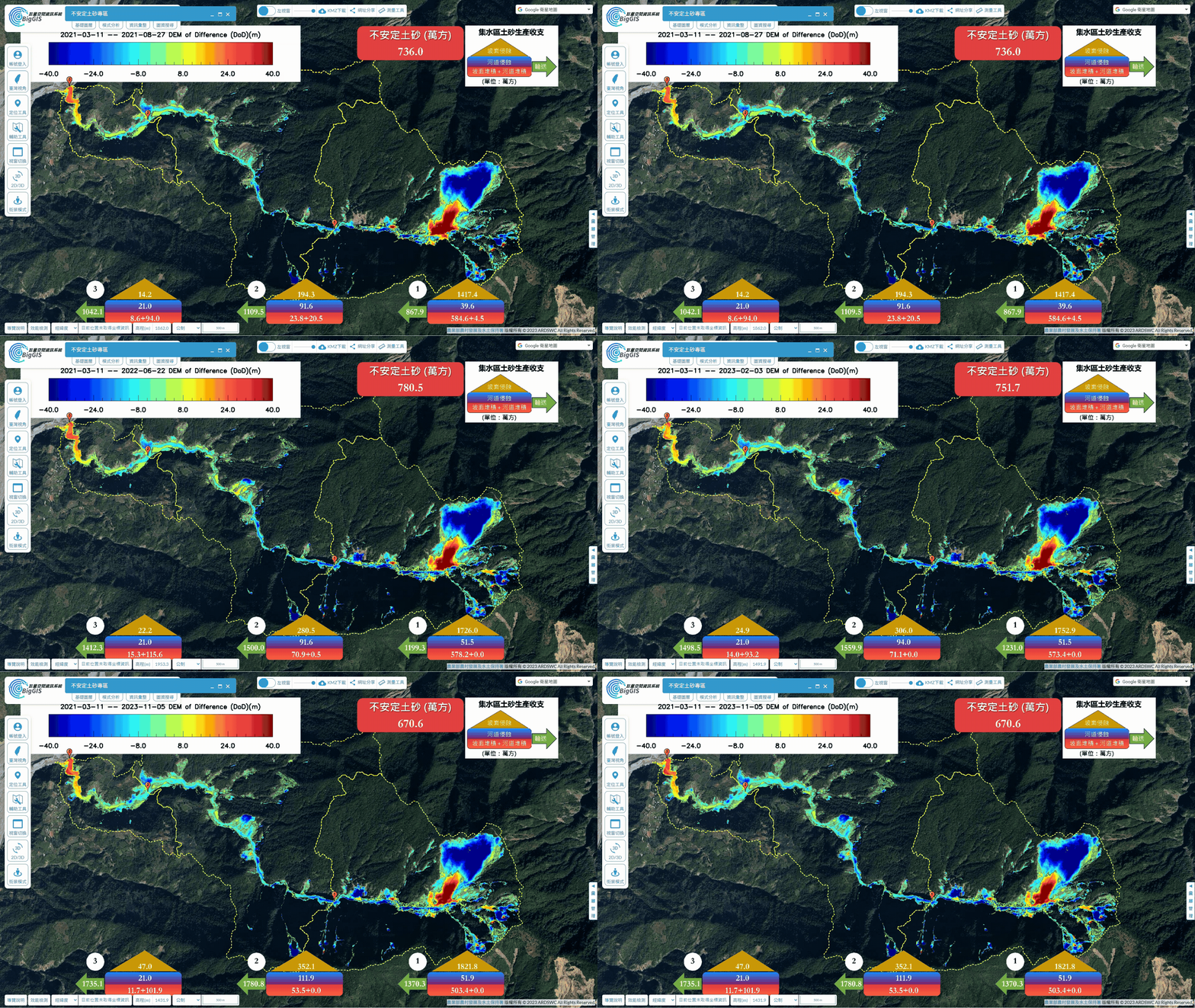
The Unstable Sediment Dynamic Map is generated using a highly customized "Analysis System of Unstable Sediment" (ASUS), integrated within the operational functions of the Big Geospatial Information System (BigGIS). It can perform unstable sediment volume analysis and generate unstable sediment budget maps for user-specified watersheds, effectively grasping the distribution and dynamic changes of unstable sediment.
Diagram: Unstable Sediment Dynamic Map.
Website Links
ARDSWC Big Geospatial Information System
Provides big geospatial information query and application related to topography, landslides, and soil and water conservation.
ARDSWC Research and Technical Development Platform
Provides big geospatial information query and application related to topography, landslides, and soil and water conservation.