



Rainfall Warning Classification
Warning Issuance Mechanism
Type 1 Warning Issuance Principles
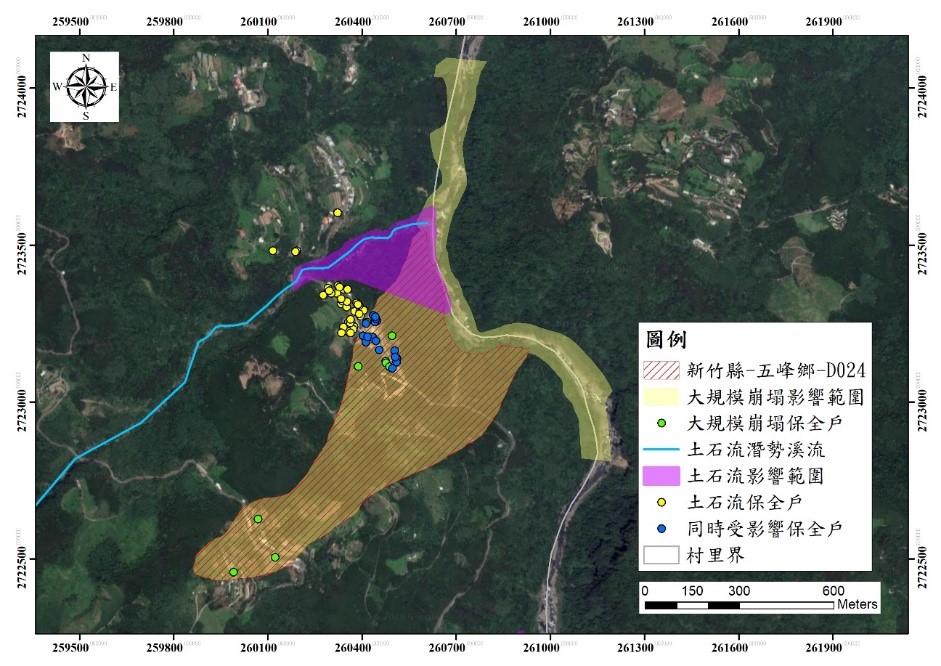
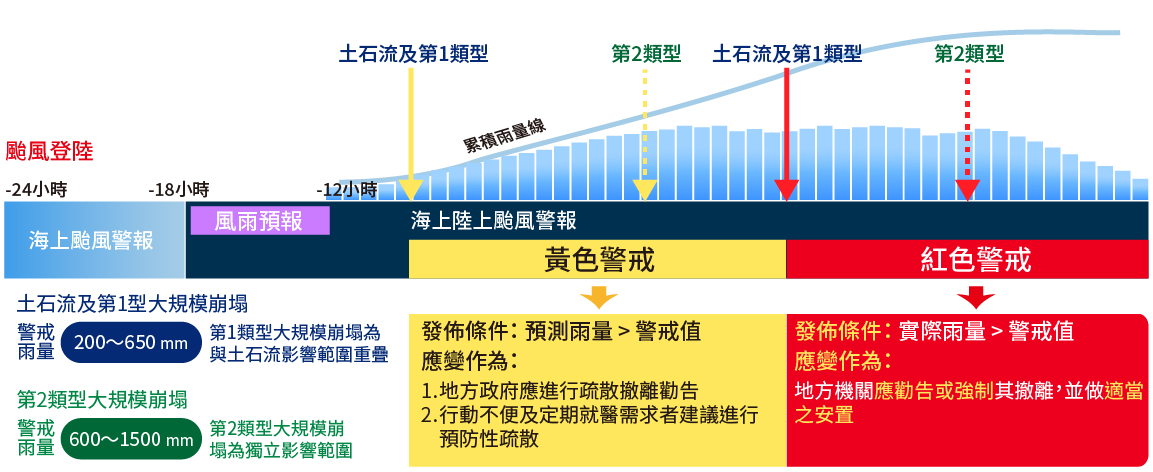
Since the protected households in Type 1 areas overlap with existing debris flow protected households, red and yellow warnings are issued simultaneously with debris flow warnings. The issuance principles are as follows:
-
Warning Issuance
Red and Yellow Warning Issuance: Type 1 warnings are issued based on the debris flow rainfall warning thresholds for each area, in conjunction with a comprehensive consideration and evaluation of on-site monitoring data. -
Warning Dismissal
- If there is no displacement or only minor displacement (less than the displacement warning threshold) during the rainfall period, the warning is dismissed according to the rainfall criteria and on-site monitoring is strengthened.
- If significant displacement (greater than the displacement warning threshold) occurred during the rainfall period, the warning will be dismissed only after the displacement rate has slowed and is below the displacement warning threshold.
-
The corresponding rainfall criteria for lifting the warning are as follows:
- ▪ Yellow Warning Dismissal Standard: 6-hour average rainfall intensity is less than 4 millimeters.
- ▪ Red to Yellow Warning Downgrade Standard: 6-hour average rainfall intensity is less than 4 millimeters.
- ▪ Red Warning Dismissal Standard: 12-hour average rainfall intensity is less than 10 millimeters, and 24-hour accumulated rainfall is less than 80 millimeters.
Type 2 Warning Issuance and Dismissal Mechanism
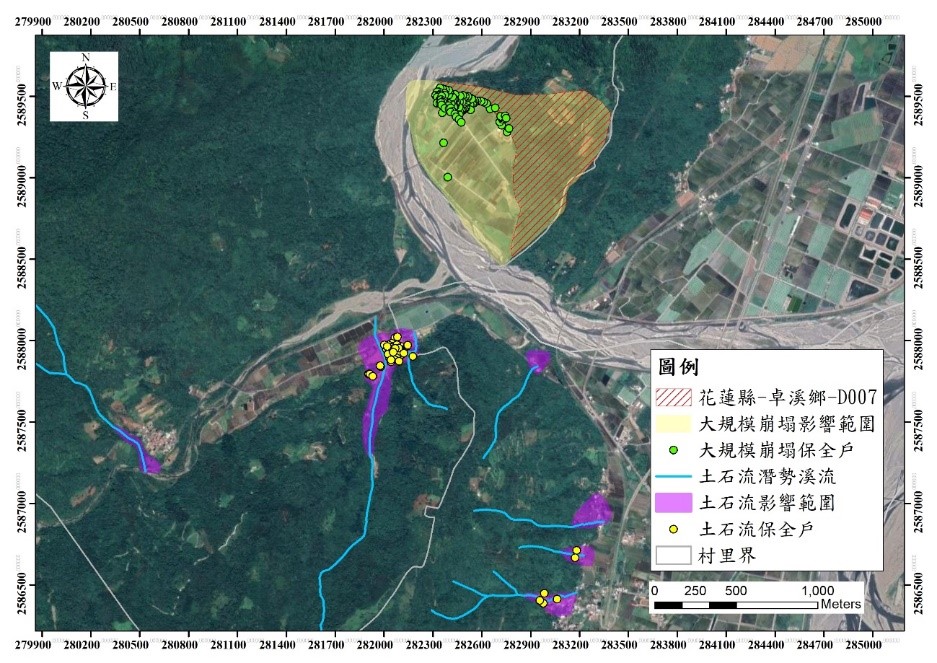
Since Type 2 areas do not have debris flow warning thresholds for reference, warnings are issued independently. The issuance principles are as follows:
-
Warning Issuance
Red and Yellow Warning Issuance: Type 2 warnings are issued based on the massive landslide rainfall warning thresholds for each area, in conjunction with a comprehensive consideration and evaluation of on-site monitoring data. -
Warning Dismissal
- If there is no displacement or only minor displacement (less than the displacement warning threshold) during the rainfall period, the warning is dismissed according to the rainfall criteria and on-site monitoring is strengthened.
- If significant displacement (greater than the displacement warning threshold) occurred during the rainfall period, the warning will be dismissed only after the displacement rate has slowed and is below the displacement warning threshold.
-
The corresponding rainfall criteria for lifting the warning are as follows:
- ▪ Yellow Warning Dismissal Standard: 6-hour average rainfall intensity is less than 4 millimeters.
- ▪ Red to Yellow Warning Downgrade Standard: 6-hour average rainfall intensity is less than 4 millimeters.
- ▪ Red Warning Dismissal Standard: 12-hour average rainfall intensity is less than 10 millimeters, and 24-hour accumulated rainfall is less than 80 millimeters.
114 Publicly Announced List of 65Priority Landslide Areas for Warning Issuance
Basic Data for Type 1 Warning Issuance
| Serial No. | Potential Area No. | Original Area No. | County/City | Township | Village | 『debris flow potential stream』 | Responsible Agency |
|---|
Basic Data for Type 2 Warning Issuance
| Serial No. | Potential Area No. | Original Area No. | County/City | Township | Village | Responsible Agency |
|---|
頁面頂端
