
Top Navigation Bar

@*土石流及大規模崩塌防災資訊網logo圖片*@ Debris Flow and Large-Scale Landslide Disaster Prevention Information Network logo image @*土石流及大規模崩塌防災資訊網名稱圖片*@ Debris Flow and Large-Scale Landslide Disaster Prevention Information Network name image
Debris Flow and Large-Scale Landslide Disaster Prevention Information Network

應變開設專區

0814豪雨土石流及大規模崩塌災害緊急應變小組 級開設 未來48小時紅黃警戒推估

警戒統計資訊

紅色警戒

  • 0
    土石流潛勢溪流
  • 0
    縣市
  • 0
    鄉鎮
  • 0
    村里
  • 0
    大規模崩塌潛勢區
  • 0
    縣市
  • 0
    鄉鎮
  • 0
    村里

黃色警戒

  • 0
    土石流潛勢溪流
  • 0
    縣市
  • 0
    鄉鎮
  • 0
    村里
  • 0
    大規模崩塌潛勢區
  • 0
    縣市
  • 0
    鄉鎮
  • 0
    村里

警戒地圖與縣市列表

桃園市
土石流警戒 0 0
大規模崩塌警戒 0 0
目前無發布任何警戒
新竹縣
土石流警戒 0 0
大規模崩塌警戒 0 0
目前無發布任何警戒
苗栗市
土石流警戒 0 0
大規模崩塌警戒 0 0
目前無發布任何警戒
臺中市
土石流警戒 0 0
大規模崩塌警戒 0 0
目前無發布任何警戒
彰化縣
土石流警戒 0 0
大規模崩塌警戒 0 0
目前無發布任何警戒
雲林縣
土石流警戒 0 0
大規模崩塌警戒 0 0
目前無發布任何警戒
嘉義縣
土石流警戒 0 0
大規模崩塌警戒 0 0
目前無發布任何警戒
臺南市
土石流警戒 0 0
大規模崩塌警戒 0 0
目前無發布任何警戒
新北市
土石流警戒 0 0
大規模崩塌警戒 0 0
目前無發布任何警戒
高雄市
土石流警戒 0 0
大規模崩塌警戒 0 0
目前無發布任何警戒
臺北市
土石流警戒 0 0
大規模崩塌警戒 0 0
目前無發布任何警戒
基隆市
土石流警戒 0 0
大規模崩塌警戒 0 0
目前無發布任何警戒
宜蘭縣
土石流警戒 0 0
大規模崩塌警戒 0 0
目前無發布任何警戒
南投縣
土石流警戒 0 0
大規模崩塌警戒 0 0
目前無發布任何警戒
花蓮縣
土石流警戒 0 0
大規模崩塌警戒 0 0
目前無發布任何警戒
臺東縣
土石流警戒 0 0
大規模崩塌警戒 0 0
目前無發布任何警戒
屏東縣
土石流警戒 0 0
大規模崩塌警戒 0 0
目前無發布任何警戒

Hazard Potential

·

What is a Debris Flow

Debris Flow Mitigation Methods

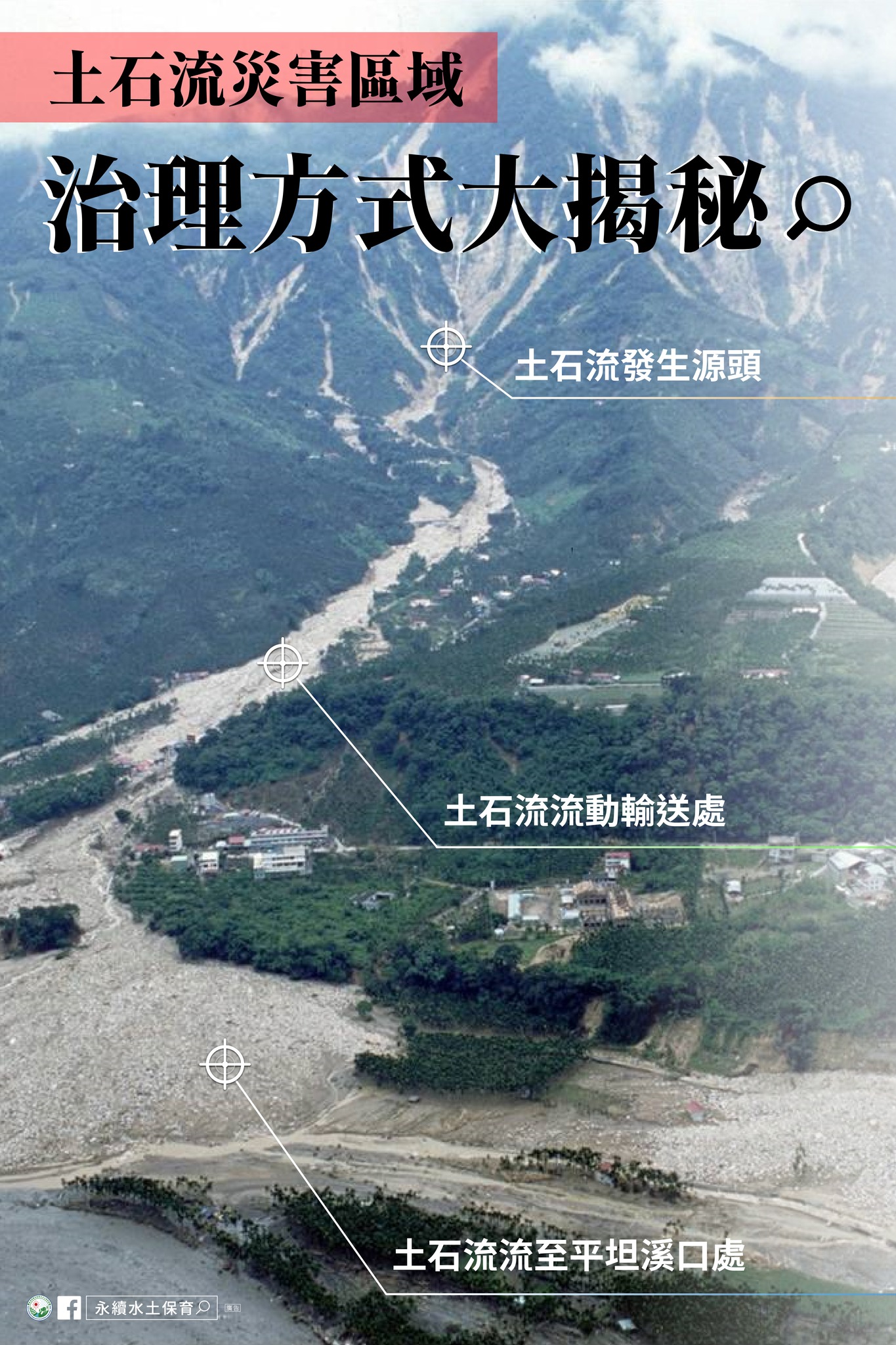
『Debris flow』 mitigation methods are categorized into three main types: source control, transportation zone control, and deposition zone control. These methods apply different measures to the source of the 『debris flow』, its flow path, and its deposition area to reduce the occurrence of 『debris flow』 and its impact on downstream areas.

Source Control

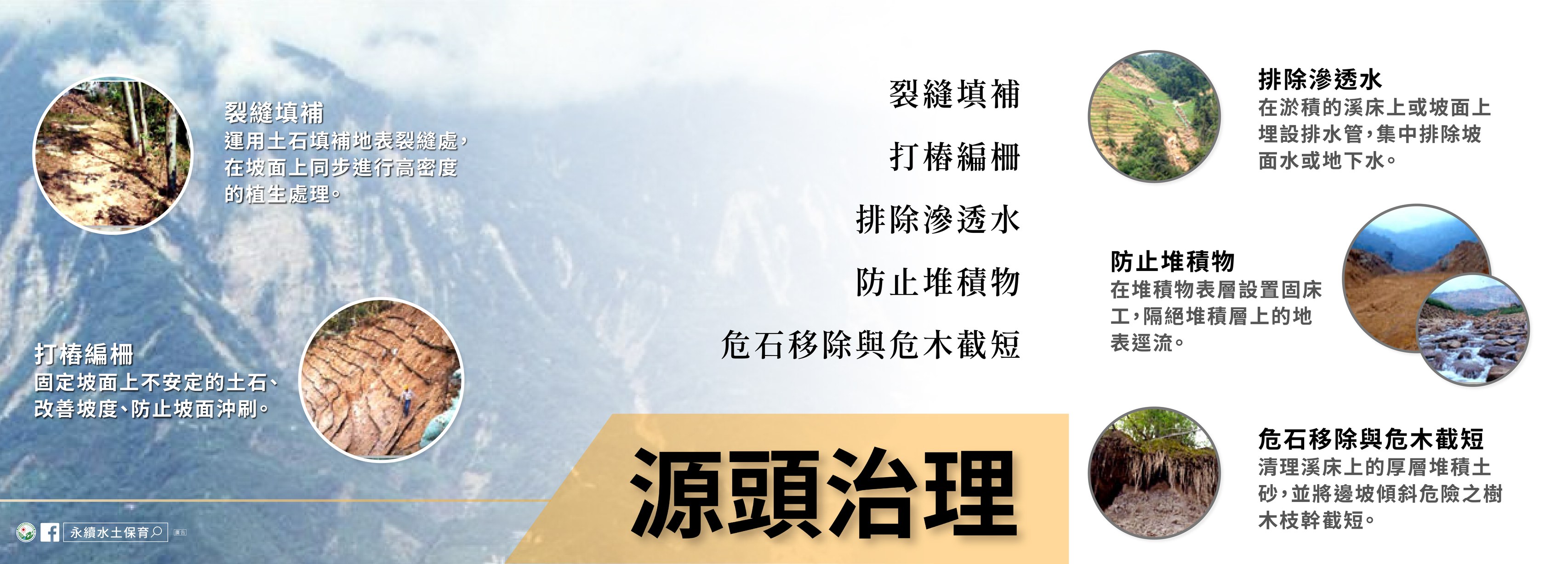
Focuses on reducing the source of sediment on slopes and in the torrent bed. This includes measures such as draining seepage water, removing hazardous rocks and trees, filling cracks, and installing 『Wood pile wattling』 to lower the probability of 『debris flow』 initiation.

Transportation Zone Control

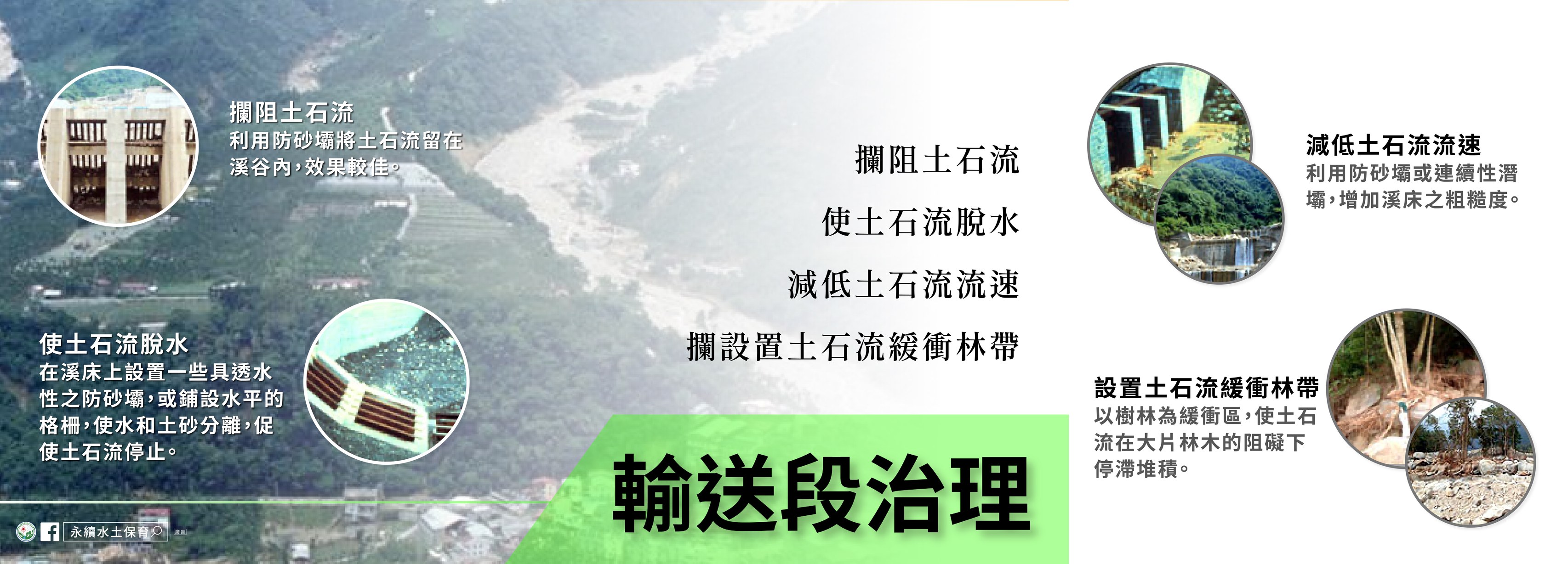
Aims to reduce flow velocity and water content during the movement of the 『debris flow』. This includes installing sediment control dams (e.g., 『sand control dam』), horizontal grids, buffer forest belts, and diversion structures to mitigate the impact on downstream areas.

Deposition Zone Control

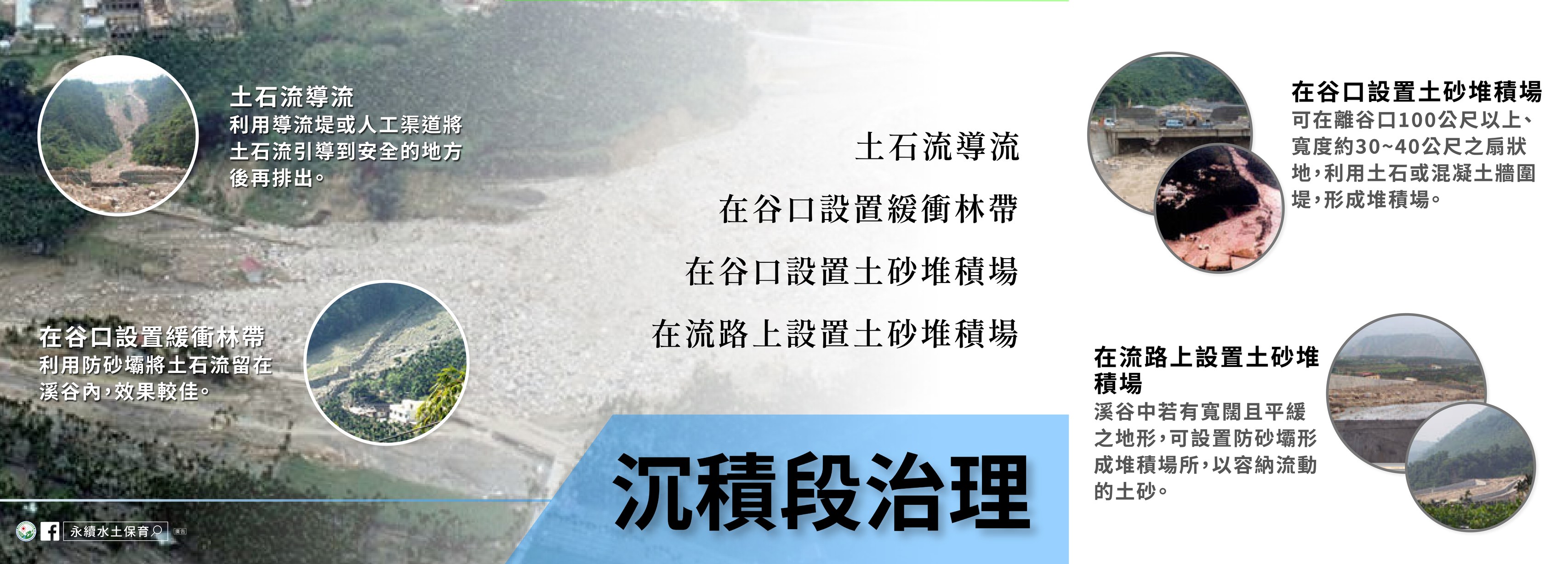
Involves managing accumulated sediment at the torrent mouth and on gentle terrain. Measures include establishing sediment retention basins, diversion dikes, and buffer forest belts to stabilize the torrent valley and channel, thereby reducing the hazard risk downstream.

Debris Flow Mitigation Case Studies
Source Control

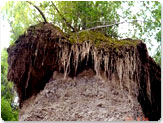
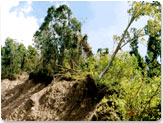
In the source area of a 『debris flow』, mitigation measures are applied based on topography and current conditions to reduce the amount of sediment material available.

1
Draining Seepage Water
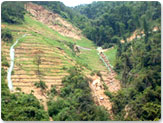
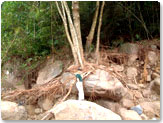
在溪床與坡面埋設排水管,集中排除坡面水與地下水

A large amount of water is the primary cause of 『debris flow』, making its removal essential. Drainage pipes can be buried in the accumulated torrent bed or on the slope to channel and remove surface water or groundwater.
2
Preventing Surface Runoff over Deposited Material
於堆積層表面設置固床工隔絕地表逕流 固床工示意圖二

Thick layers of deposited material can trigger a 『debris flow』 if widespread 『surface runoff』 occurs. Installing 『bed control structures』 on the surface isolates the runoff, thereby lowering the risk.

3
Removing Hazardous Rocks and Trimming Trees
清理溪床厚層土砂 邊坡傾斜危木枝幹截短

Clearing thick sediment layers in the torrent bed and trimming the branches of unstable trees on the slopes reduces the likelihood of collapse and triggering a 『debris flow』.

4
Fissure Filling
以現地黏土材料填補地表裂縫 裂縫填補後進行高密度植生處理

Fissures should be filled, preferably with clay, to prevent the erratic flow of groundwater. Concurrently, dense vegetation planting on the slope enhances protection.

5
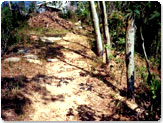
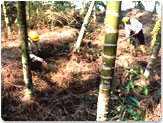
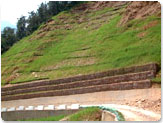
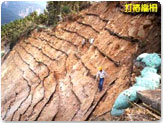
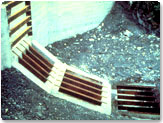
『Wood pile wattling』
木樁依距離打入土中 以竹片、PE網或鐵絲網編柵穩定坡面

This method fixes unstable sediment, improves slope gradient, and prevents erosion. It also creates a favorable environment for vegetation growth, stabilizing easily collapsing slopes.

Transportation Zone Control

In the zone where the 『debris flow』 is moving, engineering or vegetative measures can be used to reduce the flow velocity, minimizing the damage caused by the 『debris flow』.

1
Reducing Debris Flow Velocity
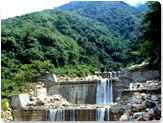
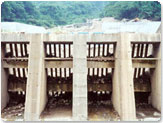
攔砂壩或連續性潛壩增加溪床粗糙度 藉由淤積土砂減緩溪床坡度以降低流速

Utilizing a 『sand control dam』 or continuous check dams increases channel roughness and, through sediment accumulation, decreases the gradient of the torrent bed, thereby slowing the 『debris flow』.

2
De-watering the Debris Flow
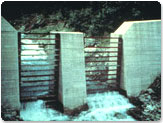
具透水性的攔砂壩加速水土分離 水平格柵讓水向下滲透、土砂被留置

Using permeable dams or horizontal grids allows water to infiltrate and sediments to be retained, achieving deceleration and water-sediment separation, thereby causing the 『debris flow』 to stop.

3
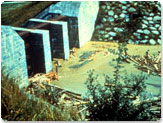
Blocking the Debris Flow
以防砂壩將土石流留置於溪谷內

Installing a 『sand control dam』 within the torrent valley retains the 『debris flow』 inside the valley, preventing overflow and downstream sedimentation.

4
Establishing Debris Flow Buffer Belts
溪谷種植樹林形成緩衝 大片林帶削減動能與輸送量

Forest belts serve as buffer zones, using vegetation to reduce the kinetic energy and transport volume of the 『debris flow』.

Deposition Zone Control

When a 『debris flow』 reaches the flat torrent mouth, sediment accumulation often leads to channel clogging and elevation of the torrent bed. Therefore, effective management of the accumulated sediment is necessary.

1
Establishing Sediment Retention Basins in the Flow Path
防砂壩形成堆積場所 於寬闊且坡度較緩的溪段堆積土砂

Installing a dam in wider, gentler sections of the valley creates capacity to contain the flowing sediment and reduce the burden on downstream areas.

2
Establishing Sediment Retention Basins at the Torrent Mouth
於谷口外圍堆積區圍堤 離谷口100公尺以上、寬約30–40公尺之扇狀地

Constructing dikes on the alluvial fan, at least 100 meters away from the torrent mouth and approximately 30–40 meters wide, safely contains the 『debris flow』 sediment within the basin.

3
Establishing Buffer Forest Belts at the Torrent Mouth
谷口緩衝林帶削弱動能並攔截土砂

Buffer forest belts attenuate kinetic energy and intercept sediment, mitigating the risk of downstream sedimentation.

4
Debris Flow Diversion
導流堤將土石流引至安全區域 人工渠道將土石流排出

When space is limited at the torrent mouth, diversion dikes or artificial channels are used to steer the 『debris flow』 into a safe area, discharging the flow.